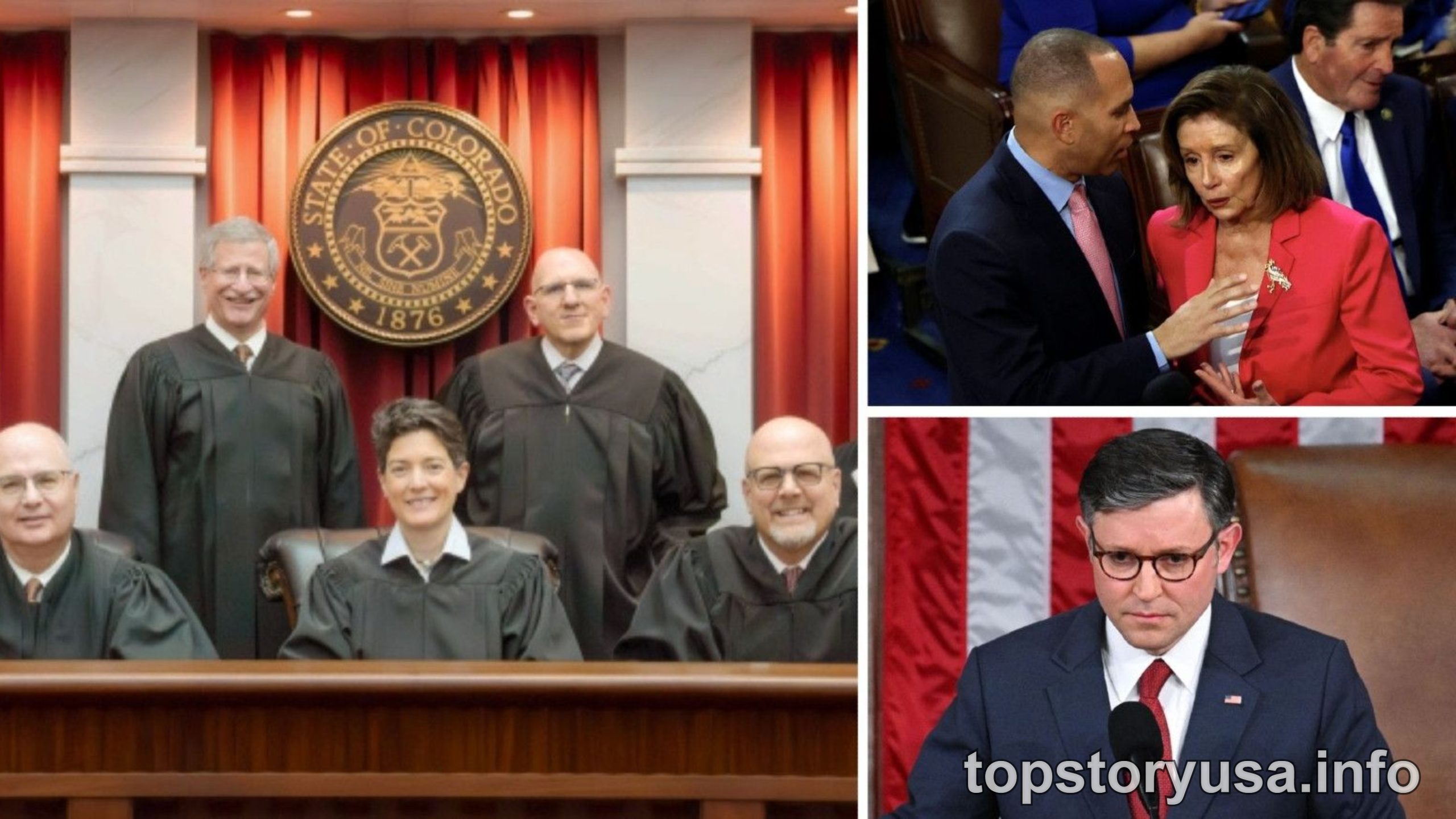
Colorado’s highest court rejected three ballot measures Monday that would have temporarily suspended the state’s independent redistricting commission ahead of the 2028 elections.
The Colorado Supreme Court ruled that the proposed measures, backed by Coloradans for a Level Playing Field, violated the state’s constitutional “single subject” requirement. The group had sought to pause the redistricting commission-established by voters in 2018-and allow approval of new congressional district boundaries for 2028 and 2030.
The Court’s Decision
Chief Justice Monica Marquez wrote in a unanimous opinion that altering the redistricting timeline “represents a seismic shift to Colorado’s longstanding redistricting process enshrined in the state constitution.” The court determined that even separating the proposal into two ballot measures still violated constitutional requirements.
A second unanimous ruling found that dividing the original measure could not satisfy the single-subject rule. A spokesperson for the group behind the initiative did not immediately respond to the court’s decisions.
Part of a Larger Redistricting Battle
The Colorado case reflects a broader national struggle over mid-decade redistricting. President Donald Trump has encouraged Republican-led states to consider redrawing congressional maps to strengthen GOP House numbers.
Democrats have encountered obstacles pursuing similar efforts in states with independent redistricting commissions. Virginia Democrats advanced a comparable ballot measure this year but faced a setback when that state’s Supreme Court blocked voter-approved maps from taking effect in May.
House Democratic Leader Hakeem Jeffries had defended the Virginia effort, stating, “The law is with us in Virginia,” before the state’s highest court sided with Republican challengers. The decision erased what Democrats hoped would become a 10-1 advantage in Virginia’s congressional delegation.
What This Means
Republicans currently hold the advantage in the nationwide redistricting fight accelerating ahead of the 2026 midterm elections. The battle began when Texas Republicans, encouraged by Trump, moved to redraw districts last year.
Both parties have engaged in increasingly aggressive struggles over congressional boundaries, but Republicans appear positioned to enter the 2026 elections with significant redistricting advantages across the country.