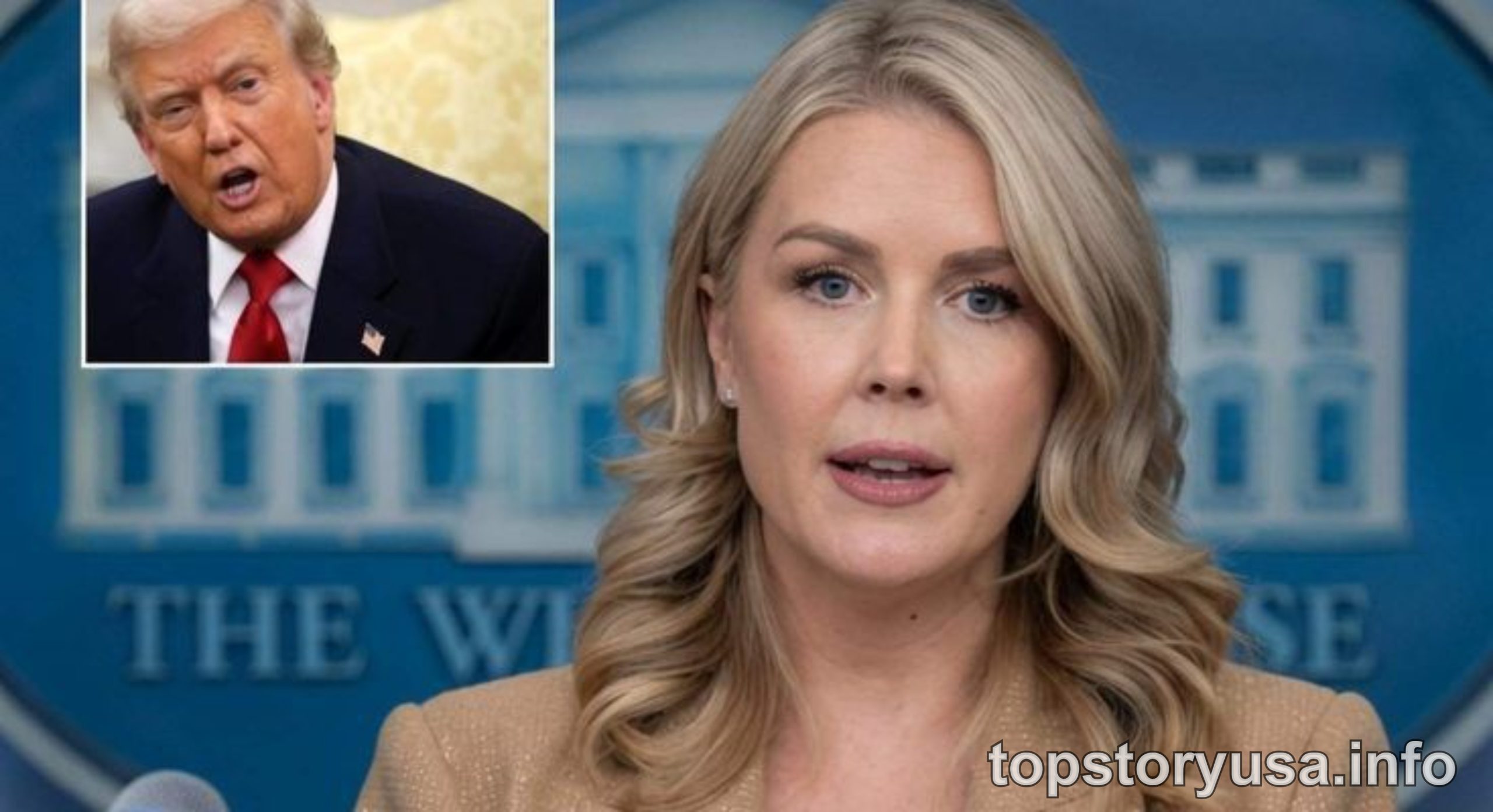
White House Press Secretary Karoline Leavitt defended modifications to the presidential press pool, saying the changes expand media access rather than restrict it.
Leavitt made the remarks during a conversation with Axios co-founder Mike Allen, addressing concerns from the White House Correspondents Association about government control over independent media coverage. She argued that the new system provides opportunities for a broader range of outlets and journalists.
What Leavitt Said
“We view them as opening access to more outlets, more voices, more news, journalists and outlets,” Leavitt said when asked about the briefing room changes. “We shouldn’t have a few outlets who have a monopoly over the briefing room or over that 13 person press pool that covers the president.”
Leavitt noted that thousands of outlets hold White House press credentials, with hundreds covering the beat daily. “Why should a single outlet have the privilege of being in that 13 person press pool every single day,” she asked, emphasizing that the changes created “more transparency, more accessibility, and greater access for a broad variety of outlets.”
The Correspondents Association Response
Allen cited a statement from the White House Correspondents Association asserting that government should not control independent media coverage. Leavitt countered that board members of the association should not dictate media access to the Oval Office or Air Force One.
“There should be equal access for all outlets,” Leavitt said. “And that’s exactly what we’re doing.”
Biden’s Media Record
Leavitt referenced a comparison between President Trump and former President Biden’s media engagement. According to reporting from Axios in July, Biden held fewer press conferences and media interviews than any of the last seven presidents at the same point in their term.
Biden conducted 164 media engagements compared to Trump’s 468 at equivalent points in their presidencies. George W. Bush recorded 248 and Ronald Reagan 262, making Biden the lowest among recent administrations.
The Administration’s Position
Leavitt concluded that the White House is adapting to the digital media landscape. “The president ran a nontraditional media campaign, which propelled him back to the highest office in the land,” she said. “We felt it was our responsibility to continue that in our coverage at the White House.”