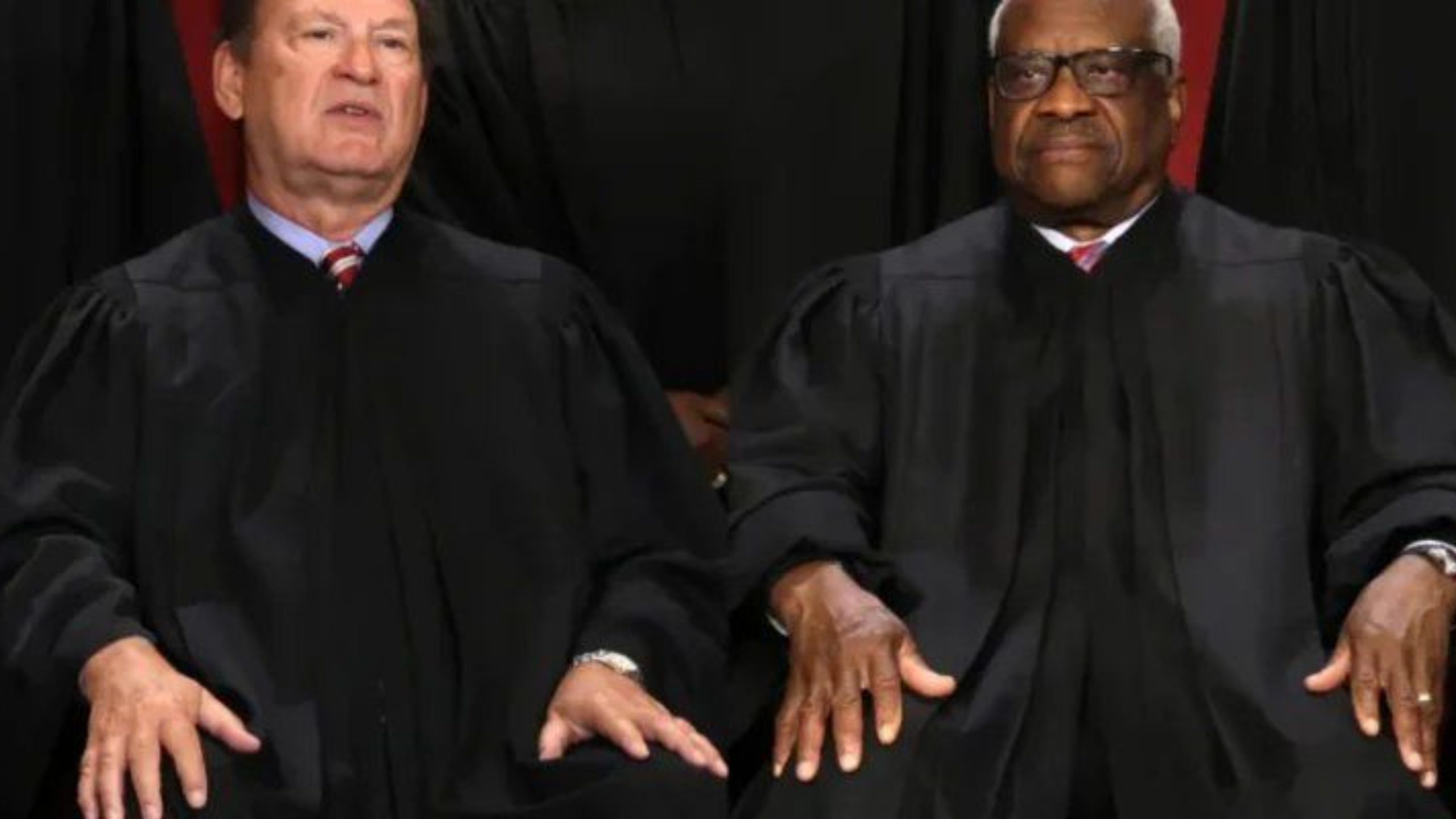
Justice Clarence Thomas criticized the Supreme Court on Tuesday for declining to hear Florida’s lawsuit against California and Washington over commercial driver’s license policies for undocumented immigrants.
Florida had challenged the two states’ issuance of commercial driver’s licenses to people in the country illegally, arguing the practice violated federal standards requiring English proficiency and lawful immigration status. The case stemmed from a fatal highway crash involving a truck driver who the state said could not read road signs.
What Thomas Said
Thomas, joined by Justice Samuel Alito, wrote that the Supreme Court had a constitutional duty to hear the dispute because it is the only court authorized to resolve conflicts between states. “If this Court does not exercise jurisdiction over a controversy between two States, then the complaining State has no judicial forum in which to seek relief,” Thomas wrote.
The justice emphasized that federal law prohibits states from issuing commercial driver’s licenses to applicants who cannot demonstrate English language proficiency or appropriate immigration status. He argued Florida’s allegations were serious because failing to follow federal licensing standards creates dangerous road conditions.
Thomas pointed to the fatal crash involving truck driver Harjinder Singh as evidence the issue posed a legitimate public safety threat. He wrote that people in the country illegally who cannot read English road signs should not be permitted to operate large commercial vehicles.
The Court’s Decision
The Supreme Court’s majority declined to take the case, leaving Florida without a judicial avenue to pursue its claims. The decision meant the two states faced no legal consequences from the high court regarding their licensing practices.
Thomas noted the court has discretion when deciding whether to hear ordinary appeals but argued disputes between states operate on a different constitutional level. “We have no more right to decline the exercise of jurisdiction which is given, than to usurp that which is not given,” he wrote.
What This Means
Florida now has no available legal forum to challenge the policies or seek relief for the deaths its residents suffered. The case highlighted disagreement among justices over whether the court should exercise its original jurisdiction in conflicts between states.