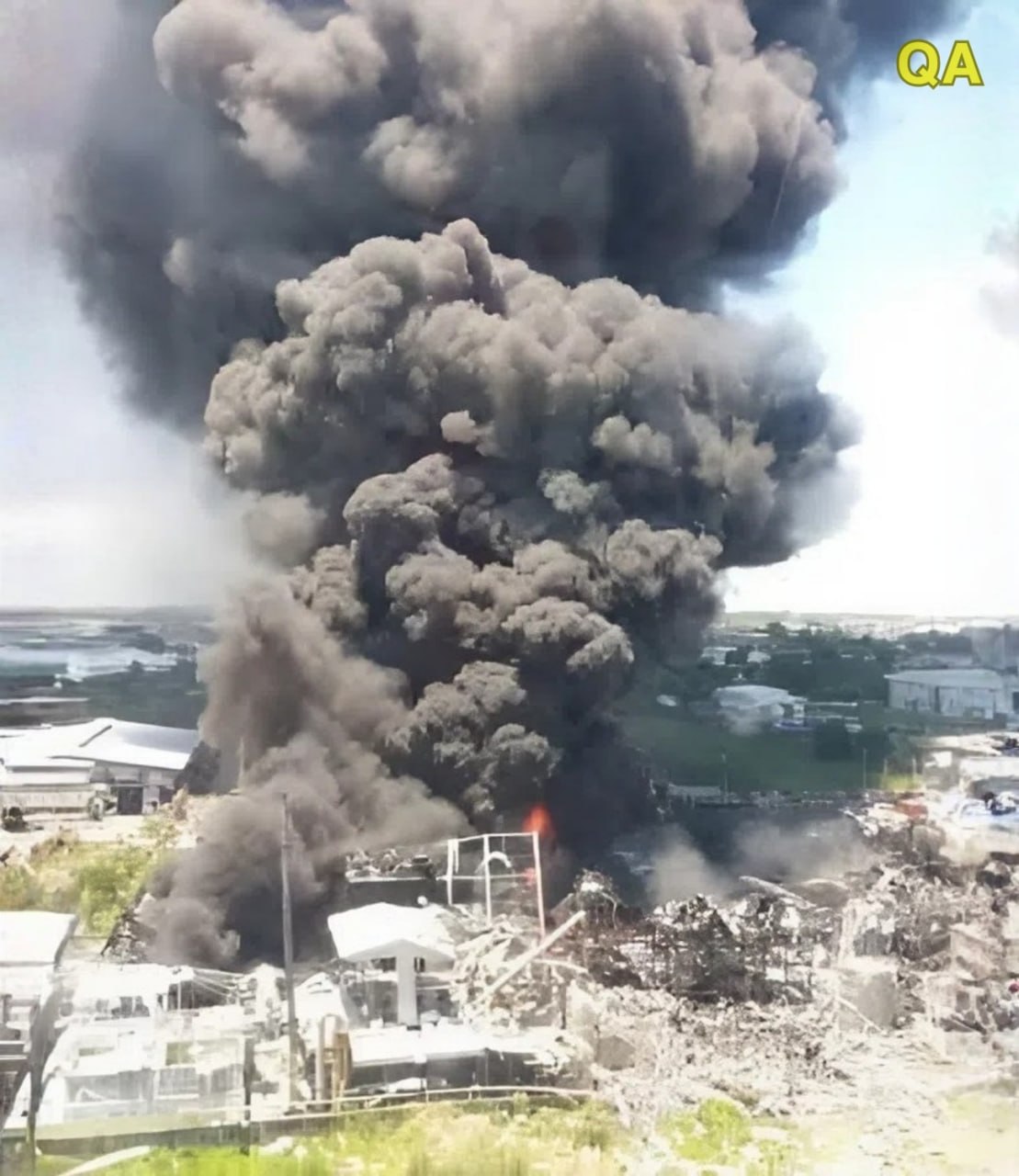
A devastating industrial fire at a biscuit manufacturing plant near the central Greek city of Trikala has claimed the lives of four women, according to Greek authorities and emergency officials. The tragedy unfolded during the early morning hours and triggered a major emergency response as firefighters battled intense flames and searched for missing workers inside the damaged facility.
Authorities say the cause of the fire remains under investigation, and officials have urged the public to avoid speculation until forensic teams complete their assessment. Support for the victims’ families and ensuring the safety of the site remain the immediate priorities.
The incident has drawn national attention across Greece, with emergency crews working under difficult conditions to contain the blaze and prevent further structural collapse. Although some early witness reports mentioned a possible explosion before the fire erupted, investigators have not confirmed whether an explosion triggered the incident or occurred as a result of the fire.
According to official briefings reported by Greek media and international news agencies, emergency services responded after flames were detected inside the industrial complex during an overnight shift. Authorities stated that 13 workers were inside the facility at the time. Eight managed to evacuate safely, while firefighters later recovered the bodies of four women from heavily damaged sections of the building. One worker was initially reported missing during the rescue operation.
The Hellenic Fire Service deployed around 40 firefighters and 15 vehicles to the scene. Thick smoke spread across the surrounding area as crews fought the blaze and worked to stabilize parts of the structure weakened by the intense heat.
Several people, including a firefighter, were taken to nearby hospitals for medical treatment and evaluation. Officials confirmed that seven individuals required hospital care following the incident, though detailed information about their conditions has not been publicly released.
Firefighters remained at the site for hours after the flames were brought under control, continuing efforts to fully extinguish hotspots and assess structural safety risks. Industrial fires are particularly dangerous because machinery, combustible materials, and unstable buildings can complicate rescue and recovery operations.
The factory is operated by Violanta, which released a statement expressing condolences to the families of the victims and confirming its cooperation with authorities. The company said the fire occurred during the night shift and emphasized that the cause has not yet been determined. Representatives stated that supporting employees and affected families is the company’s highest priority during the investigation.
Greek officials have stressed that no official conclusion has yet been reached regarding how the fire started. Some local reports cited witnesses who heard a loud noise before flames spread through the facility, but investigators have not verified whether that sound was linked to an explosion or another mechanical failure.
Industrial fire investigations in Greece typically involve fire investigators, engineers, and workplace safety inspectors. Authorities are expected to review electrical systems, production equipment, maintenance records, and surveillance footage as part of the inquiry. Officials are also examining whether any equipment malfunction or electrical issue may have contributed to the disaster.
Workers reportedly told investigators there were no gas cylinders stored in the area where the fire began, though authorities continue to examine all possible causes.
Like other members of the European Union, Greece follows strict workplace safety regulations designed to reduce industrial hazards. Manufacturing plants are generally required to maintain fire suppression systems, conduct regular inspections, and provide emergency response training for employees.
Food manufacturing facilities often contain ovens, automated machinery, packaging systems, and electrical infrastructure that can present fire risks if failures occur. Experts note that while modern safety systems reduce danger, industrial environments can still become hazardous under certain conditions.
Following major industrial accidents, authorities commonly conduct extensive safety audits to determine whether regulations were properly followed and whether improvements are needed to prevent similar tragedies in the future. Officials have not yet stated whether the facility had undergone recent inspections or whether any previous safety concerns had been identified.
The tragedy has deeply affected the local community around Trikala, where industrial employers often play an important role in the regional economy. Local officials and residents have expressed condolences to the victims’ families and praised emergency responders who worked throughout the night.
Industrial safety experts also note that certain food production environments may carry additional fire risks. Under specific conditions, materials such as flour dust can become combustible if suspended in the air and exposed to ignition sources. However, investigators have not indicated whether such factors were involved in this case.
Experts emphasize that fire prevention in industrial facilities depends on regular equipment maintenance, dust control systems, automatic fire detection, and clearly marked evacuation routes. Worker training is also considered essential in reducing casualties during emergencies.
The fact that several workers escaped safely suggests that some emergency procedures may have functioned effectively. Nevertheless, the deaths of four workers highlight the severe dangers industrial fires can pose, even in regulated workplaces.
Major international media organizations have continued to follow the story, focusing on confirmed casualty figures, official statements, and developments in the ongoing investigation. Authorities have encouraged the public to rely on verified information rather than rumors or unconfirmed reports circulating online.
In the coming days, investigators are expected to conduct detailed forensic examinations of the site to determine the exact sequence of events that led to the fire. Officials may also consider whether additional workplace safety measures or regulatory changes are needed in response to the tragedy.
For now, the focus in Greece remains on mourning the lives lost, supporting grieving families, and ensuring that the investigation proceeds thoroughly and transparently.