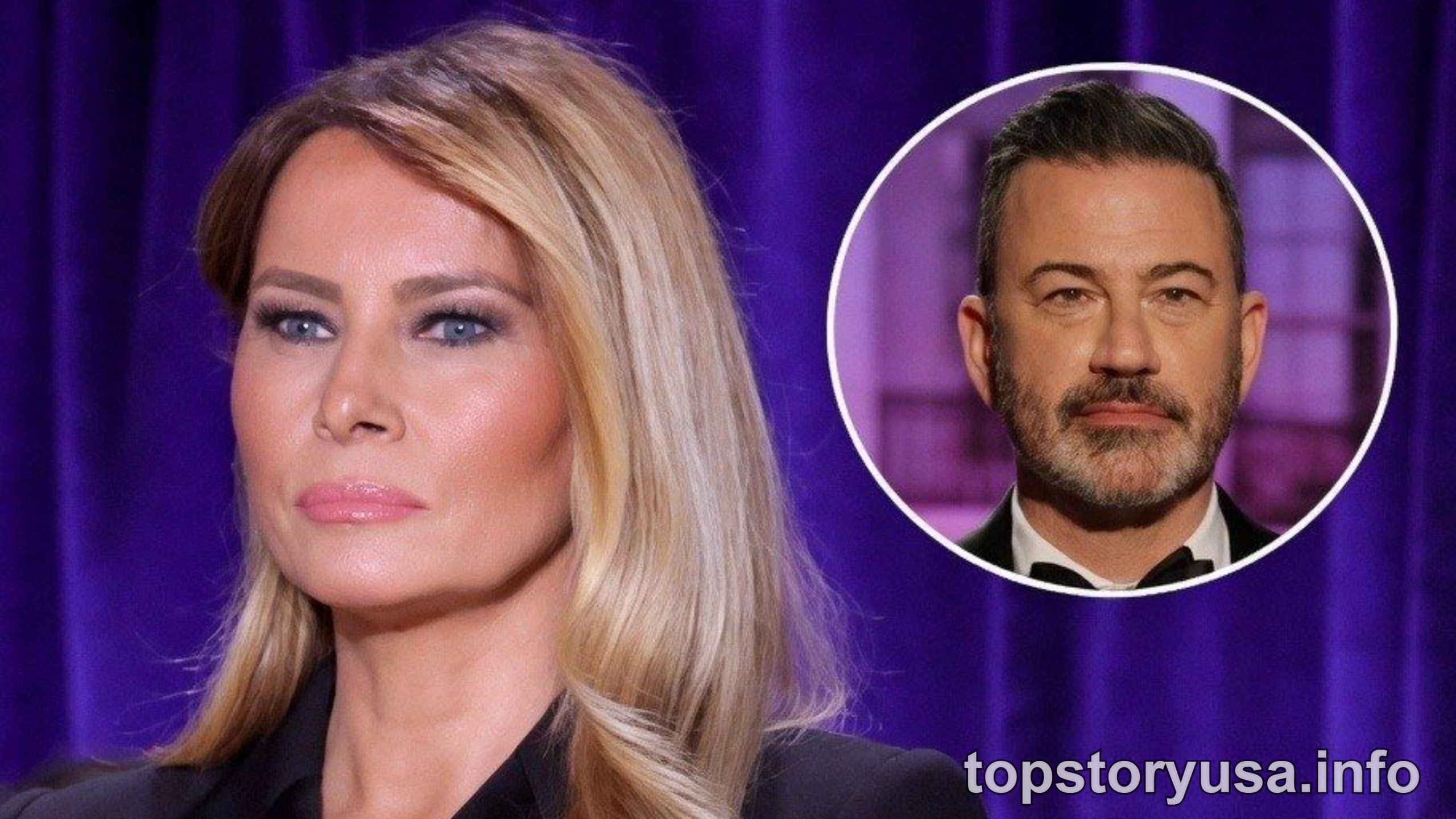
Melania Trump called late-night host Jimmy Kimmel a “coward” after he made a joke about her on his ABC program that drew swift condemnation from the former first lady and other political figures.
Kimmel made the remark during an episode of “Jimmy Kimmel Live!” that aired days before the White House Correspondents’ Dinner in Washington, D.C. The joke referenced Melania using language about widowhood and was framed as satire about age differences, according to Kimmel’s on-air defense.
The Response
Melania Trump responded by characterizing Kimmel’s words as “hateful and violent rhetoric” that deepens political divisions. “This is what happens when the media and late-night hosts spread such toxicity – it directly impacts our nation,” she said in a statement.
Donald Trump also weighed in on the controversy, saying the joke crossed a line and should not have been broadcast. He linked the timing to what he characterized as a pattern of disrespect toward his family.
Kimmel’s Defense
Kimmel defended himself on-air, insisting the remark was misunderstood and intended as light comedy. “I made no suggestion of harm or violence against anyone,” he said during the following episode of his show.
The controversy reignited broader discussions about political comedy’s boundaries, particularly during moments of heightened national concern. Some critics argued humor should avoid references to potential threats, while others defended satire as a form of protected expression.
Wider Implications
The clash underscores growing tensions in American public discourse, where entertainment, politics, and security concerns increasingly intersect. The incident sparked debate about the responsibility of media figures during politically sensitive periods.