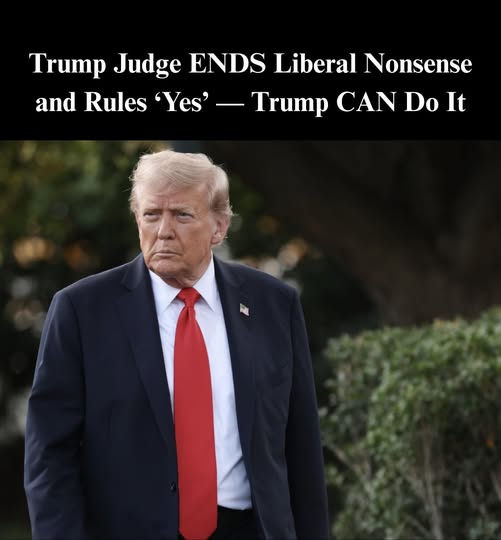
A federal appeals court has handed former President Donald Trump a significant procedural victory in an ongoing legal battle over immigration enforcement, temporarily allowing his administration’s policy of deporting certain migrants to “third countries” to continue.
The decision came from the United States Court of Appeals for the First Circuit, which issued a stay blocking a lower court ruling that would have restricted the policy. The order arrived just hours before the lower court’s decision was scheduled to take effect.
The original ruling was issued by Brian Murphy, a federal judge appointed by Joe Biden. In an 81-page opinion, Murphy determined that the Department of Homeland Security’s approach to deporting migrants to countries other than their own violates constitutional due process protections. His order required officials to first attempt deportation to a migrant’s home country—or to another nation previously approved by an immigration judge—before considering removal to a third country.
Murphy also ruled that migrants must receive clear notice and a meaningful opportunity to express fears of persecution or torture before being deported elsewhere. That process would include a “reasonable fear” interview to evaluate potential risks.
In response, the administration appealed the decision, arguing that the ruling created an unworkable system that could interfere with sensitive diplomatic negotiations and complicate deportations involving thousands of individuals. Government lawyers also argued that Murphy’s decision conflicts with previous emergency actions by the Supreme Court of the United States, which had earlier allowed the third-country removal policy to remain in place while litigation continues.
The dispute centers on whether the Department of Homeland Security can deport migrants—particularly those with serious criminal convictions—to countries willing to accept them when their home nations refuse to take them back.
The appeals court’s stay does not settle the legal question. Instead, it temporarily pauses the lower court’s order while the case continues through the appeals process. Legal experts widely expect the dispute to eventually return to the Supreme Court, where justices could ultimately decide how far executive authority extends in enforcing immigration law when deportation to a migrant’s home country is not possible.