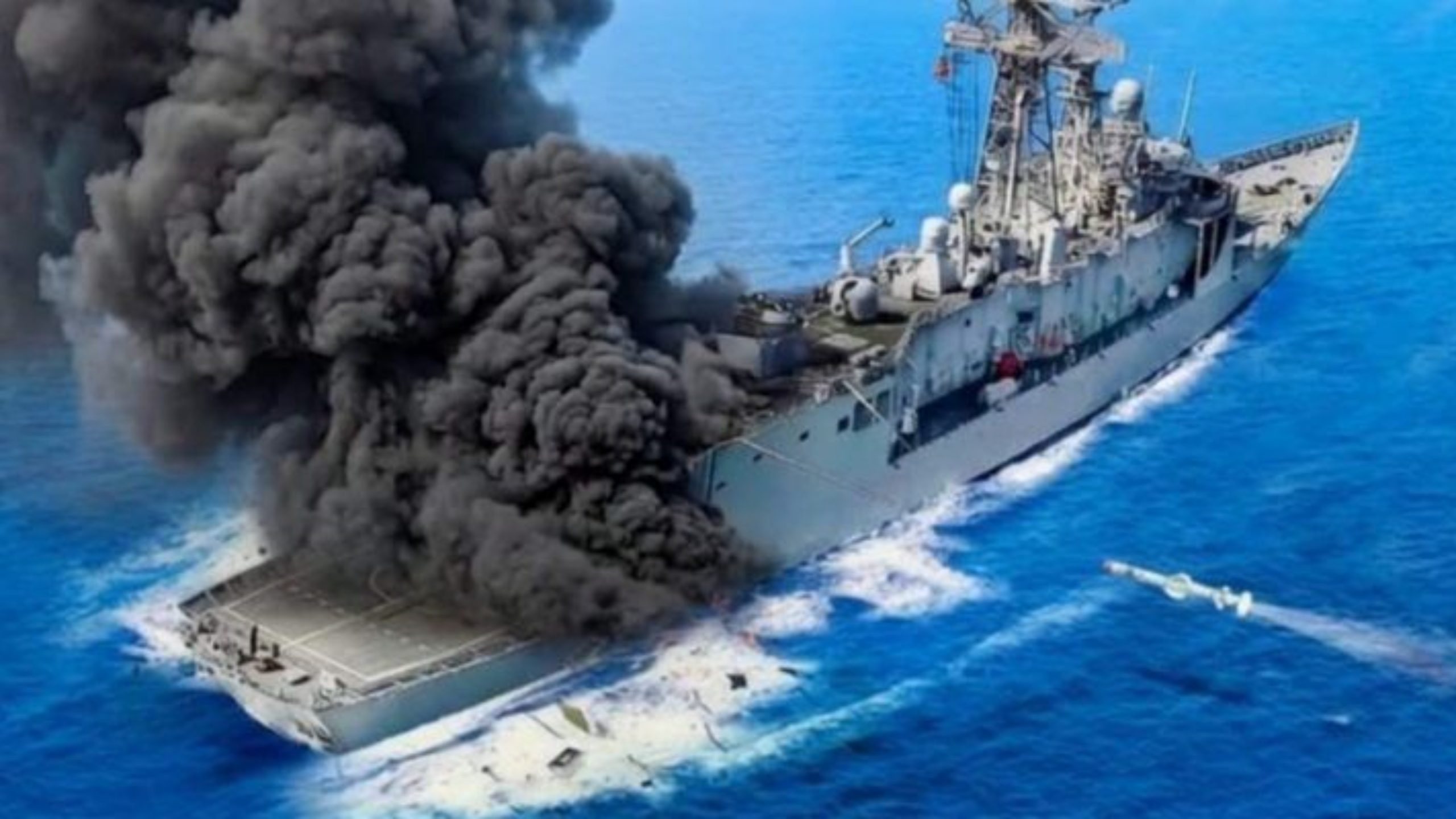
A hypothetical scenario examining naval defense systems illustrates how modern aircraft carrier strike groups respond to coordinated missile threats in contested waters.
The Strait of Hormuz remains one of the world’s most strategically important waterways, with approximately one-third of global seaborne oil passing through its narrow passage annually. Geopolitical tensions in the region have long raised questions about how military forces would respond to potential attacks on high-value assets like U.S. Navy aircraft carriers.
This analysis explores a theoretical scenario in which advanced missile defense systems, electronic warfare capabilities, and rapid response protocols work together to counter a hypothetical saturation attack.
The Theoretical Attack
In this fictional scenario, coordinated anti-ship missiles equipped with advanced guidance systems launch toward a U.S. carrier strike group. The missiles are designed to evade detection and overwhelm traditional defenses through sheer volume.
The attack assumes perfect operational security and coordination across multiple launch points, creating a simultaneous threat across the strike group’s defensive perimeter. Modern anti-ship missiles travel at varying speeds, with some capable of reaching targets within minutes.
Layered Defense Systems in Action
U.S. Navy Aegis destroyers form the outer ring of protection for carrier strike groups, equipped with phased-array radar systems capable of tracking hundreds of targets simultaneously. These vessels launch Standard Missile interceptors within seconds of detection, engaging threats at extended ranges.
The electromagnetic spectrum becomes critical during such scenarios, with naval radar systems continuously scanning for incoming threats. Close-in weapon systems provide final layers of protection for the carrier itself.
Electronic Warfare Countermeasures
Modern naval combat involves competition in the electromagnetic domain as much as the physical one. U.S. Navy vessels employ electronic warfare systems designed to jam enemy radar guidance and communications networks.
These systems allow naval forces to maintain tactical awareness while degrading an adversary’s ability to accurately target vessels. Electronic countermeasures can reduce missile accuracy significantly when properly employed.
The Response Phase
Following successful defense against an initial attack, carrier strike groups possess extensive offensive capabilities including Tomahawk cruise missiles deployed from both surface ships and submarines. These weapons enable strikes against land-based targets from hundreds of miles away.
The strategic principle underlying modern naval operations emphasizes that initial defensive success must be followed by rapid offensive action to seize initiative and prevent follow-on attacks.
Strategic Implications
This hypothetical scenario demonstrates why potential adversaries face significant challenges when contemplating strikes against U.S. Navy formations. The combination of layered defenses, advanced radar systems, and overwhelming offensive firepower creates a complex tactical environment.
Military analysts cite such scenarios when evaluating force posture requirements and the strategic balance in regions like the Persian Gulf. Understanding these dynamics informs policy discussions about naval presence and regional stability.
For military planners and strategists, the lesson remains consistent: technological capability, operational preparedness, and decision-making speed determine outcomes in modern warfare more than initial force size or surprise alone.
Editor’s Note: This analysis is based on publicly known military capabilities and hypothetical scenarios created for educational purposes only.