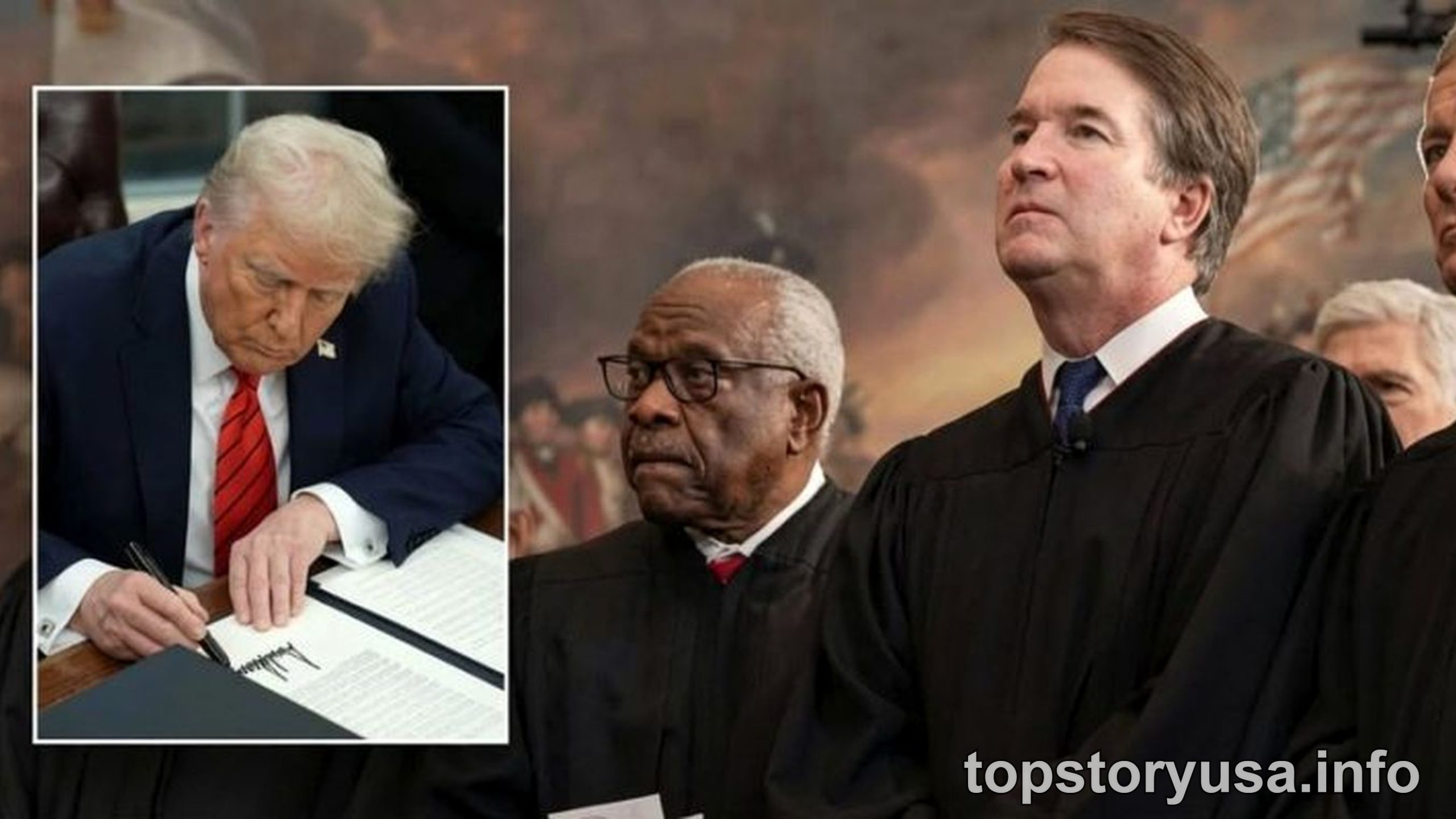
Justice Clarence Thomas accused the Supreme Court of abandoning its constitutional duty after the majority refused to hear Florida’s lawsuit against California and Washington over commercial driver’s licensing policies.
Florida filed the case after a deadly highway crash involving a truck driver in the country illegally who held a commercial license issued by Washington state. Thomas argued that the Supreme Court had an obligation to hear the dispute since lawsuits between states can only be brought before the high court.
Thomas’s Constitutional Argument
“If this Court does not exercise jurisdiction over a controversy between two States, then the complaining State has no judicial forum in which to seek relief,” Thomas wrote in his dissent, joined by Justice Samuel Alito.
Thomas contended that Florida’s allegations warranted the court’s attention because federal law requires commercial driver’s applicants to demonstrate English proficiency and valid immigration status. “People in the country illegally who can’t read road signs in English can’t be allowed to drive 80,000-pound tractor-trailers on American highways,” he stated.
The justice noted that failing to enforce federal commercial licensing standards created dangerous road conditions and had contributed to fatal accidents. “Federal law and regulations prohibit States from providing commercial driver’s licenses to applicants unless they pass a driver’s test, sufficiently understand the English language, and show appropriate immigration status,” Thomas wrote.
The Broader Implications
Thomas invoked the founding principle that the court cannot decline jurisdiction it is constitutionally granted. “We have no more right to decline the exercise of jurisdiction which is given, than to usurp that which is not given,” he wrote.
With seven justices voting to reject the case, Florida has no other legal avenue to pursue claims stemming from the deaths of three residents in the crash. The decision left the two states that issued the commercial license without judicial consequence.