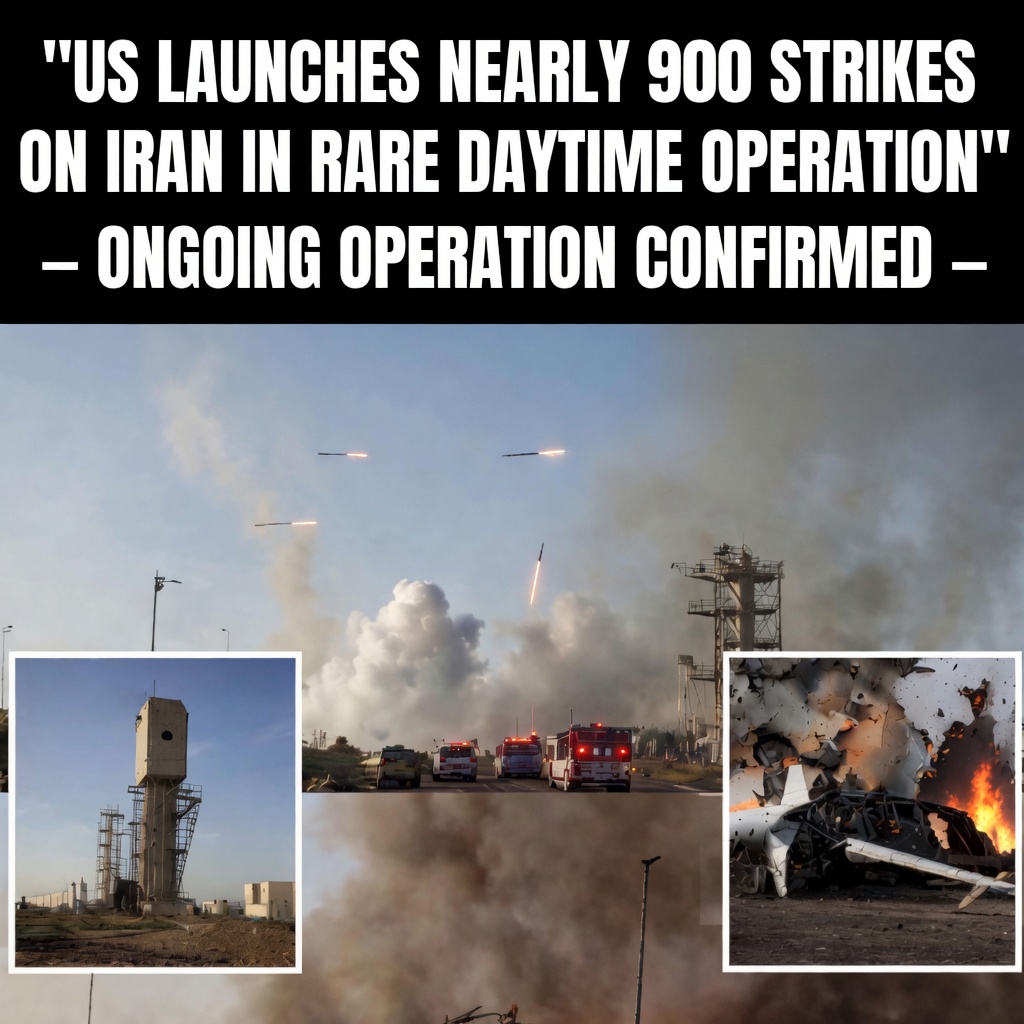
The United States conducted a large-scale daytime military operation targeting Iranian military infrastructure, marking one of the most significant coordinated strike campaigns in the Middle East in recent decades.
Witnesses across multiple regions reported seeing white contrails streaking across the sky as missiles and aircraft moved toward their targets. Explosions were heard near several military facilities, and air defense systems activated in attempted interception of incoming projectiles.
Daytime Operations Break From Doctrine
Modern military strategy typically favors nighttime operations, when darkness provides natural concealment for aircraft and forces. Night raids reduce visual detection risks and make interception more difficult for defenders.
The reported U.S. strikes diverged from this established pattern by launching during daylight hours. Military analysts say daytime operations can intentionally demonstrate overwhelming confidence in air superiority and operational control.
Conducting strikes under clear skies signals that the attacking force does not fear interception. This psychological dimension carries significance alongside the physical impact on targets themselves.
Targets and Strategic Goals
Initial reports indicate strikes targeted multiple categories of military infrastructure across different Iranian regions. Facilities believed hit included missile storage depots, radar and early-warning installations, air defense systems, command and communication centers, and military bases linked to the Revolutionary Guard.
Military analysts suggest the operation aimed to disrupt Iran’s ability to coordinate missile launches and defensive responses. Damaging key radar stations and communication networks weakens a military’s capacity to track incoming aircraft and respond quickly, a strategy sometimes called “blinding the battlefield.”
Radar networks and missile systems form the backbone of defensive capability in modern warfare. Targeting these assets early in an operation reduces counter-attack risks by preventing retaliatory launches.
Visible Evidence From the Sky
Multiple contrails crossed the sky during the reported operation, with residents in several areas sharing images and videos of white streaks cutting through the daytime horizon. Contrails occur when hot exhaust gases from aircraft or missiles mix with cold upper atmosphere air.
The visibility of dozens or hundreds of missiles and aircraft moving through the sky within a short period creates distinctive patterns visible to large civilian populations. Such visuals carry significant psychological impact, especially during daylight when clearly observable.
The Defensive Response
Iran’s air defense systems reportedly responded quickly once strikes began. Sirens and alert systems activated in several locations, and defensive missile launches were reported in some regions.
Defending against large coordinated strike waves presents extreme challenges for air defense units. When attacks occur simultaneously from multiple directions or involve large numbers of missiles, defense systems may struggle to intercept every threat, a scenario military experts describe as a “saturation attack.”
Message and Context
Operations of this scale carry strong political and strategic messaging beyond immediate military impact. Large-scale strikes can project confidence and dominance while reshaping perceptions about power dynamics in a conflict.
The Middle East has experienced rising tensions in recent years due to geopolitical rivalries, military alliances, and ongoing regional conflicts. This operation reflects broader strategic competition in the region.
This story has been updated. CNN’s international affairs team contributed to this report.