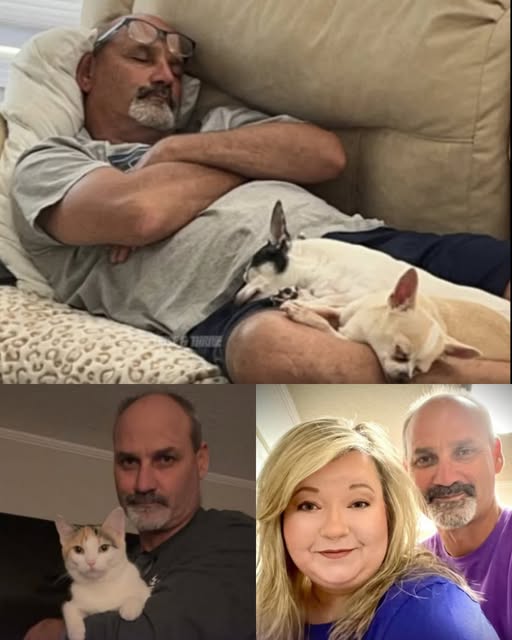
For nearly three weeks, Denny McGuff’s hospital room echoed with the silent desperation of a traumatic brain injury (TBI) following a workplace electrocution. Left with a severe TBI and a disorder of consciousness, his wife’s world narrowed to the repeated plea: “Can you hear me?” Doctors initially offered grim assessments, describing his condition as “critical” and “uncertain.” The family endured an agonizing wait, where progress was measured by the faintest flickers of response from Denny.
A subtle but profound shift then occurred. Denny’s wife observed purposeful movements – opening his mouth, a toe wiggle – in direct response to her verbal commands. To neurologists, these were not random reflexes but crucial indicators of emerging awareness, signifying a fragile transition towards a minimally conscious state. These command-following signs were meticulously witnessed and documented, providing concrete evidence of neurological activity where only stillness had existed.
This breakthrough profoundly altered Denny’s care trajectory. He was accepted into Shepherd Center’s specialized program for disorders of consciousness, a nationally recognized rehabilitation facility. While the journey of TBI recovery remains long, unpredictable, and potentially fraught with setbacks, these validated moments offer clinical backing to his wife’s enduring hope. They signify a shift from questioning if he could respond, to considering how far he can go, underscoring the vital role of family in complex brain injury rehabilitation.