What Happened
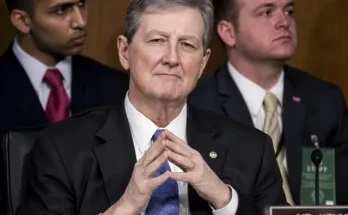
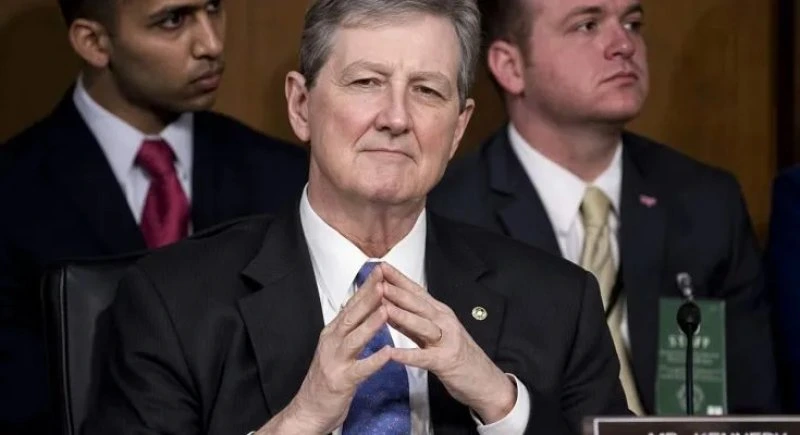
The room fell quiet when Senator John Neely Kennedy opened a copy of the federal immigration code and directed his attention toward Alexandria Ocasio-Cortez. The New York congresswoman had been defending her decision to provide constituents with information about their constitutional rights during immigration enforcement encounters.
Kennedy questioned whether the guidance respected the distinction between lawful public education and conduct intended to obstruct federal immigration officers. He approached the disagreement with a document rather than a lengthy opening accusation. “Congresswoman, there’s a difference between knowing the law and helping somebody break it.”
Ocasio-Cortez rejected the suggestion that explaining constitutional protections amounted to encouraging criminal activity. She insisted that Americans should understand their rights regardless of their citizenship or immigration status. Kennedy turned to a highlighted passage of federal law addressing the concealment and harboring of people who are unlawfully present. Then he asked whether an elected official should ever provide assistance designed to prevent law enforcement from locating someone.
Ocasio-Cortez responded that teaching people how to exercise legal rights was fundamentally different from physically concealing someone or obstructing an investigation. The confrontation drew upon a genuine political controversy. On February 12, 2025, Ocasio-Cortez’s office hosted a Know Your Rights webinar addressing encounters with Immigration and Customs Enforcement. The following day, White House border official Tom Homan said he had requested an examination of whether her activities violated federal law.
But the question Kennedy introduced was more complicated than the suggestion that information about constitutional rights automatically amounted to criminal assistance. What does federal law actually prohibit, and where does protected legal education end? The answer emerged when the statutory language Kennedy had highlighted became the focus of the disagreement.
The real political dispute began when Ocasio-Cortez’s congressional office organized an online event for constituents concerned about immigration enforcement. The February 12 webinar provided information about constitutional protections and how individuals could respond during encounters with federal immigration officers. The congresswoman’s office described the event as an effort to help residents understand legal rights available under American law.
Such guidance can involve explaining the role of judicial warrants, access to legal counsel, and protections against certain searches. Immigration enforcement officials nevertheless raised concerns about whether some public guidance could interfere with their ability to carry out lawful duties. Tom Homan became one of the most prominent critics of the event. On February 13, he announced that he had requested an examination of whether the congresswoman’s activities crossed legal boundaries. His comments transformed a constituent information session into a broader political dispute involving the Justice Department and federal immigration enforcement.
Ocasio-Cortez responded by defending the legality of the webinar and rejecting suggestions that informing constituents about their rights constituted wrongdoing. On February 28, she sent Attorney General Pam Bondi a letter requesting clarification about the possibility of a federal investigation. Her statement maintained that public officials should not face prosecution merely for explaining constitutional protections. The letter also raised concerns that threats of investigation could discourage elected officials from communicating with their constituents about the law.
Those events were documented publicly, but they did not establish that Ocasio-Cortez had been charged with a federal offense. They also did not establish the Senate confrontation with Kennedy described in the circulating political narrative. Nevertheless, they provided the underlying dispute that Kennedy brought into the discussion. He wanted to know whether immigration-rights education could become unlawful if it crossed into practical assistance with evading enforcement. Ocasio-Cortez wanted to distinguish that concern from lawful explanations of constitutional protections.
The disagreement concerned the boundary between informing someone of a right and intentionally facilitating conduct prohibited by federal law. Kennedy placed the statutory text on the table and identified Title 8, Section 1324 of the United States Code. The provision addresses several offenses involving the unlawful transportation, concealment, harboring, and encouragement of certain immigration violations. One subsection prohibits knowingly concealing or harboring a person who remains in the United States unlawfully, subject to the statute’s requirements.
Kennedy argued that the language established meaningful limits on conduct undertaken to assist individuals facing immigration enforcement. He questioned whether public officials should be especially careful when providing advice that could be misunderstood as instructions to evade authorities. Ocasio-Cortez asked him to distinguish criminal conduct from the lawful exercise of constitutional protections. Kennedy acknowledged that the statute did not generally prohibit citizens from explaining the law or referring someone to legal assistance. But he maintained that conduct deliberately intended to conceal someone from federal officials raised a different question.

The distinction became important because Section 1324 describes particular actions rather than establishing a general ban on immigration-related discussion. It requires courts to evaluate relevant conduct and applicable legal elements instead of treating every statement about immigration enforcement as equivalent. Ocasio-Cortez emphasized that a person can possess constitutional protections even when immigration authorities are investigating that person’s legal status. Kennedy agreed that the government must follow the Constitution while carrying out immigration enforcement. He then asked whether someone could invoke constitutional language as a pretext for organizing unlawful concealment.
She answered that actual criminal conduct should be evaluated through evidence, not presumed from the existence of a rights-education program. That response forced Kennedy to narrow his criticism. A webinar describing lawful rights could not automatically establish criminal harboring without evidence of conduct meeting the statute’s requirements. However, public guidance also could not authorize actions otherwise prohibited by federal law.
The dispute had become more precise. The federal statute prohibited defined forms of conduct, while the webinar’s legality depended on what information was provided and how it was used. Kennedy returned to the question of what an elected official should say when people requested help during immigration enforcement encounters. He argued that public education should explain constitutional protections without suggesting that government officers lacked lawful enforcement authority.
Ocasio-Cortez responded that her constituents needed accurate information precisely because many feared being unable to understand their legal options. She emphasized that informing someone about the right to remain silent did not mean encouraging that person to commit an offense. Kennedy asked whether the same distinction applied to refusing consent to certain searches. Ocasio-Cortez replied that constitutional rules permit individuals to withhold consent in circumstances where officers lack independent legal authority to proceed. She added that people should not obstruct officers who possess lawful authority to act.
That qualification became important. Kennedy argued that legal guidance should communicate both individual rights and the consequences of interfering with lawful government actions. Ocasio-Cortez agreed with the importance of accuracy but challenged the suggestion that discussing rights required special suspicion. She asked whether he would object to a constitutional-rights seminar explaining what citizens could do during ordinary police encounters. Kennedy answered that he would not object to accurate legal education. He maintained that his concern involved whether particular advice was intended to help someone avoid lawful immigration enforcement.
Ocasio-Cortez pointed out that such intent would require evidence rather than speculation about the political beliefs of the speaker. Kennedy acknowledged that prosecutors could not establish a crime merely by showing that a public official opposed government policy. The exchange exposed a limitation on the accusation that had initially framed the confrontation. Political opposition to immigration enforcement is not itself equivalent to criminal obstruction. Likewise, teaching legal rights does not automatically establish participation in a scheme to conceal someone from authorities.
But actual assistance meeting the elements of a federal offense could still create liability, regardless of the speaker’s political affiliation. The issue therefore required examination of specific actions and circumstances. Neither participant could settle it through a metaphor about burglars or an accusation of political hypocrisy. They needed to identify what the actual federal law required.

The turning point came when Ocasio-Cortez asked Kennedy to read the exact conduct covered by the highlighted subsection. Kennedy identified language concerning knowingly concealing, harboring, or shielding certain individuals from detection. Ocasio-Cortez then asked whether the provision expressly made general public instruction about constitutional rights a criminal offense. Kennedy acknowledged that it did not contain such a blanket prohibition. He argued that speech could still become relevant evidence when connected to actual criminal conduct.
Ocasio-Cortez accepted that distinction but maintained that prosecutors would need to demonstrate the relevant offense rather than assume it. The highlighted page had therefore established something more specific than the circulating political accusation suggested. It showed that federal law prohibited defined forms of immigration-related assistance under specified circumstances. It did not establish that hosting a Know Your Rights webinar automatically satisfied those conditions.
Kennedy responded that he wanted lawmakers to distinguish legitimate education from instructions intended to frustrate lawful enforcement. Ocasio-Cortez said the same distinction protected constitutional rights while preserving the government’s ability to investigate actual wrongdoing. The disagreement remained substantial because the lawmakers approached immigration enforcement from different policy perspectives. But the legal standard itself had become clearer. A person’s immigration status does not eliminate every constitutional protection available under American law. At the same time, constitutional protections do not grant permission to commit independent criminal offenses. Those principles can coexist without requiring either side to abandon its broader political position.
The Reaction
The moderator then introduced Ocasio-Cortez’s February 28 letter to Attorney General Bondi. The document challenged the suggestion that educating constituents about legal protections was inherently criminal. It also requested clarification about any investigation reportedly prompted by Homan’s statements. Kennedy questioned whether the letter fully addressed the possibility that particular advice could cross a legal boundary. Ocasio-Cortez responded that a credible investigation would need to identify the allegedly unlawful conduct. The critical missing element was evidence that the webinar itself involved criminal harboring rather than lawful information about constitutional rights.
Kennedy shifted toward the broader responsibilities of lawmakers who communicate with constituents about federal enforcement. He argued that elected officials should ensure public guidance clearly distinguishes established legal protections from actions that could expose individuals to prosecution. Ocasio-Cortez agreed that accuracy was important but questioned why rights education should be portrayed as suspicious simply because immigration was involved. She maintained that constituents could not make informed decisions without understanding the laws governing interactions with enforcement officers.
Kennedy replied that public officials should avoid presenting selective explanations that omit significant legal obligations. Ocasio-Cortez asked whether he would apply the same standard to government officials describing immigration enforcement powers. He answered that federal authorities should also accurately explain what they could lawfully do. That answer broadened the disagreement beyond one congressional webinar. A government officer who misstates the scope of lawful authority can create confusion and potentially infringe protected rights. An elected official who inaccurately describes legal protections can likewise mislead constituents about the consequences of their actions. Both forms of misinformation can create serious problems, even when the people involved believe they are acting responsibly.
The discussion therefore turned toward the professional standards required when providing legal guidance to the public. Ocasio-Cortez emphasized the importance of consulting qualified immigration attorneys and providing information grounded in established law. Kennedy argued that any congressional educational material should make the difference between protected rights and criminal conduct unmistakable. Neither demanded that the other abandon their position on immigration policy. Instead, the dispute became a test of whether both could endorse a clear factual distinction. A public official may criticize immigration enforcement while recognizing the government’s lawful authority. A law enforcement official may investigate suspected immigration violations while respecting constitutional protections. The question of criminal responsibility must then be assessed through actual evidence.

That principle limited the accusation that Ocasio-Cortez had automatically become an accomplice by hosting a webinar. And it also preserved Kennedy’s concern that genuine acts of unlawful harboring could not be excused merely by calling them compassionate. As the hearing approached its conclusion, the moderator asked both politicians to identify the evidence necessary to evaluate the original accusation. Kennedy proposed examining the webinar’s full presentation, supporting materials, and any specific conduct identified by investigators. He argued that isolated excerpts could not reliably establish whether the guidance had remained within lawful limits.
Ocasio-Cortez supported reviewing the complete materials rather than relying on politically charged summaries. She also asked that the same evaluation distinguish legal education from any separate actions attributed to participants. The moderator summarized the competing positions. Kennedy believed the law imposed meaningful criminal limits on knowingly assisting violations of immigration requirements. Ocasio-Cortez maintained that general education about constitutional rights did not establish criminal conduct. Those propositions were not necessarily contradictory. The unresolved question was whether the documented webinar had actually crossed the relevant legal boundary.
No criminal conviction, authenticated finding, or evidence of unlawful concealment had been produced during the discussion. The lawmakers therefore could not responsibly claim that the webinar itself established a federal harboring offense. The moderator proposed that the committee prepare a written comparison of the webinar materials and the statutory provisions invoked during the debate. The comparison would identify which statements described established constitutional protections and which raised questions requiring additional context. It would also distinguish political criticism from factual conclusions concerning criminal liability.
That proposal became the confrontation’s practical turning point. Instead of treating a highlighted statute as proof of wrongdoing, the discussion moved toward examining the relationship between the law and specific conduct. Kennedy’s position would receive a substantive test against the statutory requirements. Ocasio-Cortez’s defense would likewise be evaluated according to what her educational materials actually communicated. The process would not predetermine either politician’s preferred conclusion. It would establish whether the original accusation rested on evidence or on an interpretation unsupported by the relevant record.

What This Means
The decisive development was not a personal insult, but the decision to evaluate the actual material against the elements of the law. The confrontation began with an accusation that Ocasio-Cortez had used her congressional position to help people evade federal immigration enforcement. Kennedy introduced Section